


Every 60 seconds . . . Nathan needed help.
Nathan has gone from needing sensory support every other minute to scheduled sensory breaks just once every 25 minutes.
July 22, 2026
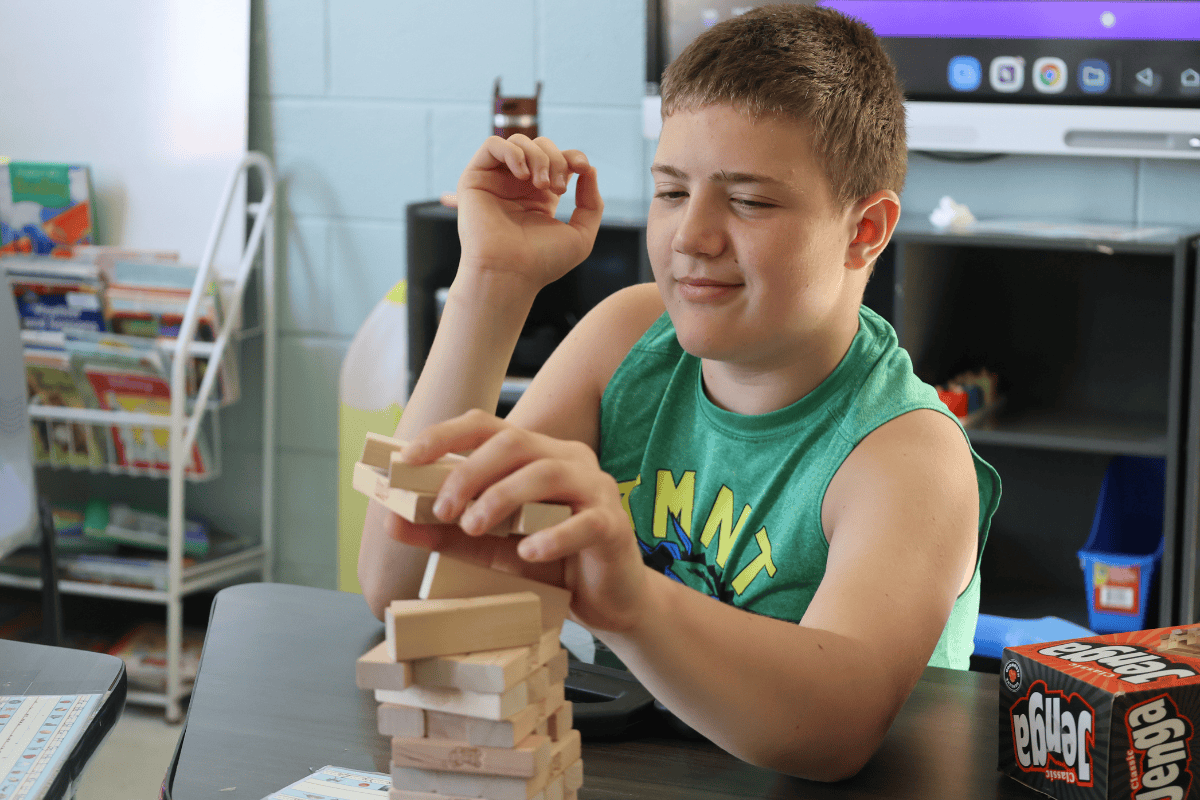
When Nathan arrived at Little City’s Center for Education in August 2025, he needed help every 60 seconds.
His day often looked the same: one minute of classroom work, followed by one minute on a trampoline to meet his sensory needs.
Without that routine, he would become overwhelmed, leading to behaviors that put himself or others at risk.
“All of our students have some sort of automatic sensory function and we need to find ways to compete against that function so they are better able to regulate their emotions and their bodies,” said Nicole Ruiz, Nathan’s Board-Certified Behavior Analyst. “Nathan needs a lot of darkness, a lot of physical pressure on his body and we need tools to safely address that while also helping him move away from those needs.”
Through individualized support, Nathan began using new sensory tools — including weighted blankets, compression vests, tunnels, and heavy carts — while learning to communicate exactly what his body needed using his communication device.
The transformation has been remarkable.
Today, Nathan has gone from needing sensory support every other minute to scheduled sensory breaks just once every 25 minutes. His long-term goal is even greater: using sensory tools only when he independently asks for them.
That progress is possible because Nathan has access to the right school sensory tools and equipment — but every student’s needs are different, and the demand for sensory tools continues to grow.
As nearly 50 students begin a new school year at Little City’s Center for Education, they’ll each rely on specialized resources to help them regulate their bodies, communicate their needs, and stay engaged in the classroom.
From weighted blankets and compression vests to sensory swings, movement equipment, communication supports, and other therapeutic tools, these resources help students overcome barriers that can stand in the way of learning.
Nathan’s journey is proof of what’s possible when those supports are available. In less than a year, he has made extraordinary progress toward greater independence and success in the classroom.
This school year, you can help more students experience breakthroughs of their own. Your support will provide sensory supplies and resources that give students with profound disabilities the opportunity to learn, grow, and achieve milestones that once felt out of reach.